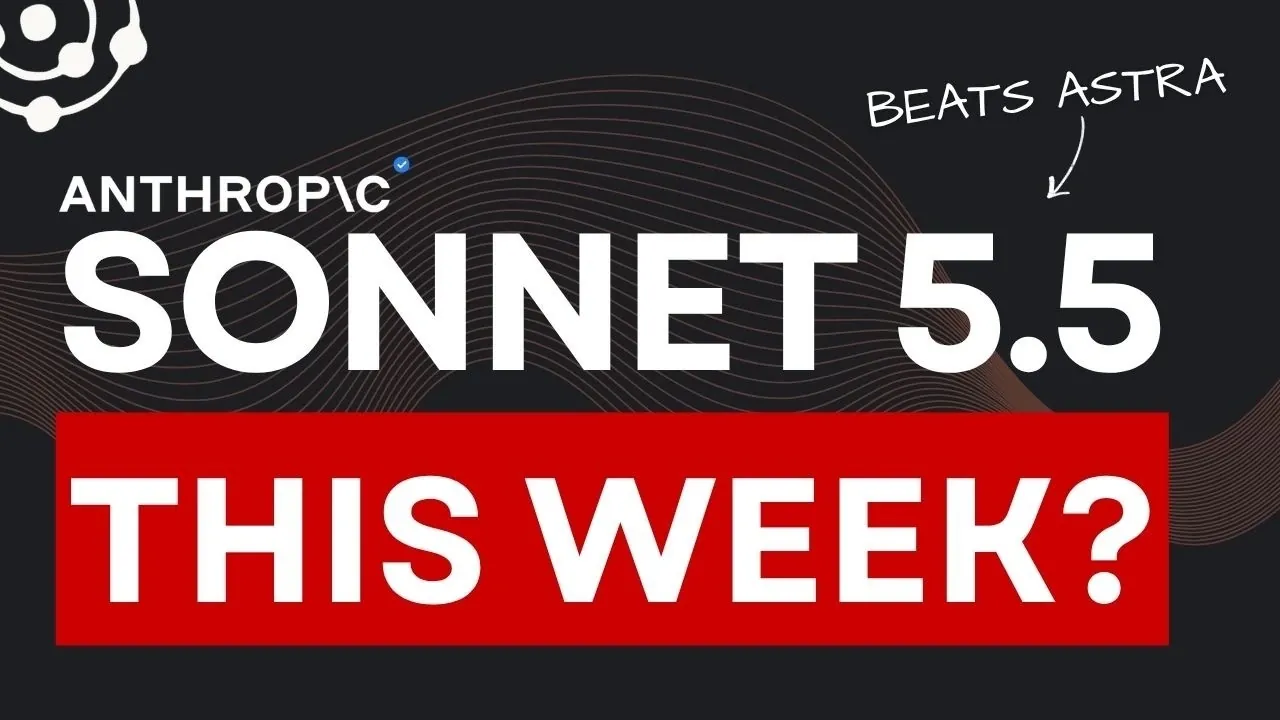
Anthropic, OpenAI and leading Chinese research labs are driving a wave of AI advancements that highlight the industry’s rapid evolution. In a new explainer, Universe of AI examines key developments, including Anthropic’s upcoming Sonnet 5.5 release, which aims to balance performance and affordability by addressing the computational cost barrier faced by many developers. The post also touches on OpenAI’s work on GPT-7, which is expected to introduce a new architecture, “Bell,” designed to improve efficiency without sacrificing capability. These updates reflect a broader industry shift toward sustainable and accessible AI solutions.
Explore how these innovations are shaping the competitive landscape, from China’s Qwen 4 excelling in specialized tasks like front-end coding to DeepSeek V5 outperforming benchmarks with two trillion parameters. You’ll also gain insight into the implications of hardware constraints, such as China’s reliance on Huawei Ascend chips and how potential changes, like the lifting of Nvidia chip bans, could reshape global AI development. This breakdown offers a clear view of the trends and challenges defining the current AI ecosystem.
Anthropic’s Sonnet 5.5: A Cost-Effective Contender?
TL;DR Key Takeaways :
- Anthropic is set to launch Sonnet 5.5, a cost-effective and efficient AI model, designed to outperform existing models like GPT-6 Soul and Luna, while addressing computational cost challenges for developers.
- OpenAI is advancing with GPT-7 and GPT-8, featuring a new “Bell” architecture that emphasizes efficiency and sustainability, making innovative AI more accessible and environmentally conscious.
- China’s AI sector is gaining momentum with models like Qwen 4 and DeepSeek V5, showcasing competitive performance despite hardware constraints and potentially benefiting from a lift on Nvidia chip restrictions.
- Miniax Lab is introducing specialized models, M3.1 Flash for speed and Space Bunny for versatility, reflecting the industry’s shift toward tailored AI solutions for specific applications.
- Key trends in AI include a focus on efficiency, specialization and open source initiatives, fostering a more inclusive and practical ecosystem for developers, businesses and users across industries.
Anthropic is poised to release its latest model, Sonnet 5.5, next week, strategically aligning its launch with OpenAI’s highly anticipated Dev Day. This model has undergone rigorous stealth testing, with early evaluations indicating that it surpasses existing models like GPT-6 Soul and Luna in specific performance metrics. Designed as a cost-effective alternative to Opus 5.5, Sonnet 5.5 aims to strike a balance between capability and affordability.
For developers, this model offers a practical solution to the challenge of accessing high-performing AI without incurring the substantial computational costs typically associated with large-scale systems. By focusing on efficiency, Anthropic is addressing a critical need in the AI community, allowing broader adoption and fostering innovation in resource-constrained environments.
OpenAI’s Next Frontier: GPT-7 and GPT-8
OpenAI continues to set the pace in the AI race with its development of GPT-7 and GPT-8. These upcoming models are expected to feature a new architecture, codenamed “Bell,” which promises to deliver significant advancements over the current “Doug”-based models such as Astra, Soul and Luna. OpenAI’s approach emphasizes the distillation of larger models into more efficient and cost-effective versions, making sure that advanced AI capabilities remain accessible to a wider audience.
This strategy reflects a broader industry shift toward sustainable AI solutions, where computational efficiency is prioritized without compromising performance. For you, this means access to powerful tools that are not only more affordable but also aligned with the growing demand for environmentally conscious technology. OpenAI’s innovations are likely to set new benchmarks for what AI can achieve in terms of scalability and real-world applicability.

Check out more relevant guides from our extensive collection on Anthropic Sonnet that you might find useful.
- Sonnet 5 Launches: Everything You Need to Know About Anthropic’s Mid-Tier AI
- Fable 5 and Mythos 5 Return Together with New Claude Sonnet 5
- Claude Sonnet 5 Rumors : Half the Price of Opus 4.5, Launching Soon
China’s AI Surge: Qwen 4 and DeepSeek V5
China’s AI sector is making rapid strides, with models like Qwen 4 and DeepSeek V5 emerging as strong competitors on the global stage. Qwen 4 has demonstrated exceptional proficiency in specialized tasks, such as front-end coding, positioning it as a viable alternative to models like Opus 5.5 and Astra. Meanwhile, DeepSeek V5, a two-trillion-parameter model, has reportedly outperformed Astra in multiple benchmarks, showcasing its potential to tackle complex challenges with precision.
What sets these models apart is their development under hardware constraints, particularly the use of Huawei Ascend chips. Despite limited access to high-performance hardware like Nvidia GPUs, Chinese research labs have managed to innovate and deliver competitive results. For developers, these advancements provide new tools that expand the possibilities for AI-driven solutions, particularly in specialized domains where precision and efficiency are paramount.
Miniax Lab’s Dual Approach: M3.1 Flash and Space Bunny
Miniax Lab is preparing to introduce two distinct AI models: Miniax M3.1 Flash and Space Bunny. Each model is designed with a specific focus, reflecting the industry’s growing trend toward specialization. M3.1 Flash prioritizes speed, making it ideal for applications that require rapid processing, while Space Bunny emphasizes versatility, catering to a broader range of use cases.
This dual approach highlights a shift away from one-size-fits-all solutions toward models that are optimized for targeted applications. For you, this means access to tools that are better aligned with your unique project requirements, whether you need a model for high-speed data processing or a versatile system capable of handling diverse tasks. Miniax Lab’s strategy underscores the importance of tailoring AI solutions to meet the evolving needs of users and industries.
China’s Hardware Challenges and Potential Breakthroughs
China’s progress in AI has been tempered by limited access to high-performance hardware, particularly Nvidia chips, which are critical for training large-scale models. However, recent developments suggest that the Nvidia chip ban may soon be lifted, potentially alleviating compute shortages and accelerating innovation in the Chinese AI sector.
Access to Nvidia hardware would enable Chinese research labs to train larger, more sophisticated models, further intensifying global competition in the AI space. For the broader AI community, this could lead to shorter innovation cycles and a more diverse range of model offerings. As a developer or user, staying informed about these developments is crucial, as they could significantly impact the availability and performance of AI tools in the near future.
Emerging Trends in the AI Industry
Several key trends are shaping the current and future landscape of AI:
- Efficiency and Cost-Effectiveness: Organizations are increasingly focusing on models that deliver high performance while minimizing computational demands, making advanced AI more accessible to a wider audience.
- Specialization: The industry is moving toward the development of models optimized for specific applications, providing tailored solutions that address unique challenges across various sectors.
- Open source AI: The rise of open source AI initiatives is fostering greater collaboration, transparency and flexibility, empowering developers to innovate and adapt AI technologies to their specific needs.
For you, these trends represent a shift toward a more inclusive and practical AI ecosystem, where tools are designed to meet diverse requirements while remaining affordable and efficient. This evolution is paving the way for innovative applications that have the potential to transform industries ranging from healthcare to finance and beyond.
A Rapidly Evolving Landscape
The upcoming releases of Anthropic’s Sonnet 5.5, OpenAI’s GPT-7 and China’s Qwen 4 and DeepSeek V5 underscore the dynamic and competitive nature of the AI industry. With advancements in model architecture, parameter scaling and hardware accessibility, the field is evolving at an unprecedented pace. For developers, businesses and users, these innovations offer new opportunities to use AI for applications ranging from coding and automation to large-scale data analysis and beyond. Staying informed and adaptable will be essential as the AI landscape continues to transform, offering tools and solutions that redefine what is possible in technology and beyond.
Media Credit: Universe of AI
Disclosure: Some of our articles include affiliate links. If you buy something through one of these links, Geeky Gadgets may earn an affiliate commission. Learn about our Disclosure Policy.
