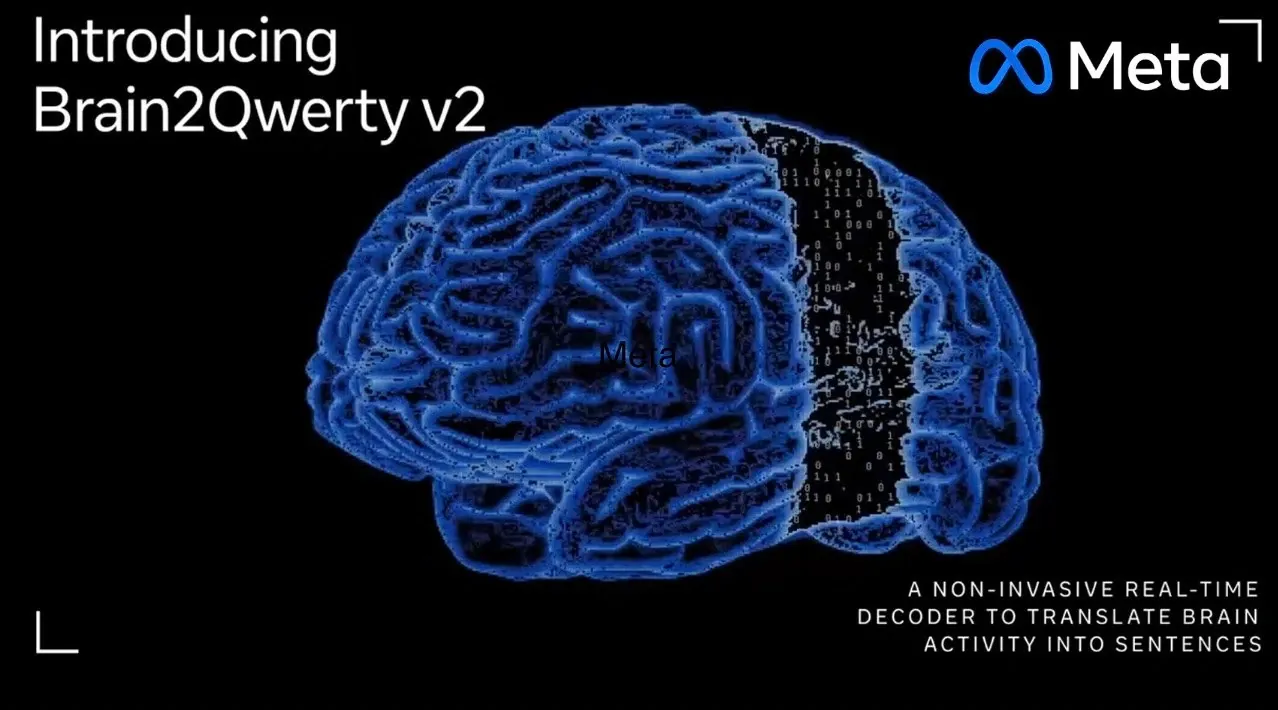
Meta’s Brain2QWERTYv2 represents a notable advancement in brain-to-text decoding, using non-invasive magnetoencephalography (MEG) technology to translate neural activity into written sentences. Unlike traditional brain-computer interfaces that rely on surgical implants, this system interprets brain signals externally, offering a safer and more accessible alternative. AI Grid’s overview highlights how Brain2QWERTYv2 decodes neural patterns triggered during controlled typing tasks, achieving an average word accuracy of 61% in experimental settings. However, the reliance on MEG scanners, which are both bulky and costly, underscores the significant hardware challenges that must be addressed before this technology can move beyond the lab.
Explore how Brain2QWERTYv2’s sentence-level decoding approach impacts its precision and usability, particularly in dynamic communication scenarios. Gain insight into the ethical and privacy concerns surrounding neural data collection, as well as the steps researchers are taking to safeguard user consent and security. Additionally, the overview provide more insights into future priorities, such as enhancing signal interpretation for noisier data and advancing wearable MEG technology, which are crucial for making this system a practical option for individuals with severe communication impairments.
How the Technology Works
TL;DR Key Takeaways :
- Meta’s Brain2QWERTYv2 is a non-invasive AI system that translates brain activity into text using magnetoencephalography (MEG) technology, aiming to improve communication for individuals with severe disabilities.
- The system achieves sentence-level decoding with an average word accuracy of 61%, but faces challenges such as high error rates, latency and limited real-world applicability.
- MEG scanners, essential for the system, are bulky, expensive and impractical for daily use, highlighting the need for advancements in portable and affordable brain-scanning hardware.
- Ethical and privacy concerns, including user consent, data security and regulatory oversight, are critical to making sure responsible development and deployment of the technology.
- Future improvements, such as expanding training data, enhancing signal decoding and developing wearable hardware, are necessary to transition Brain2QWERTYv2 from a research prototype to a practical assistive tool.
Brain2QWERTYv2 uses MEG scanners to interpret neural signals without requiring invasive procedures such as implants or surgeries. This non-invasive approach makes the system inherently safer and more accessible compared to traditional brain-computer interface (BCI) systems. The AI decodes brain signals recorded during controlled typing tasks, translating them into text at the sentence level. Unlike systems that rely on direct neural connections, Brain2QWERTYv2 uses external hardware to analyze and interpret brain activity.
The process begins with participants hearing or visualizing sentences, which triggers specific neural patterns. MEG scanners detect these patterns by measuring magnetic fields generated by brain activity. The AI then processes this data, mapping it to corresponding text. By avoiding invasive methods, the system opens the door to broader applications, but its reliance on external hardware introduces limitations that must be addressed for practical use.
Performance: Promising but Limited
Brain2QWERTYv2 has demonstrated encouraging results in controlled experiments, achieving an average word accuracy of 61%, with the most successful participant reaching 78%. While these figures highlight the system’s potential, they also underscore its current limitations. Key challenges include:
- High error rates and latency: These issues hinder the system’s ability to support real-time communication, a critical requirement for practical applications.
- Sentence-level decoding: The system’s focus on entire sentences rather than individual words reduces precision and immediacy, complicating its use in dynamic scenarios.
These constraints emphasize the need for further refinement to enhance both accuracy and responsiveness, making sure the technology can meet the demands of real-world communication.

Become an expert in Meta AI with the help of our in-depth articles and helpful guides.
- Meta Adventurer Smart Glasses Unboxing and Hands-on First Look
- Meta Smart Glasses Update Adds Muse Spark AI for Owners
- Meta’s New AI Pendant : Features, Privacy Risks and Release Date
- Google’s New AI Smart Glasses Are Leaving Meta Behind
- What Meta Ray-Ban Update 126 Reveals About the Future of Smart Glasses
- Why Intel’s New Arc G3 Extreme Could Dethrone AMD in Handheld Gaming
- How Meta’s Ray-Ban Display Redefines Augmented Reality Wearables
- Ray-Ban Meta 124.0 Update Quietly Unlocks 5-Minute Video Recording
- How Google Gemini’s New Canvas Dashboard is Completely Changing File Creation
- Your Samsung Galaxy Phone Just Got Smarter: Google Gemini Now Controls Samsung Apps
Research Context and Challenges
Meta’s research involved nine healthy participants in controlled laboratory settings. Participants were instructed to type sentences after hearing them, providing structured and clean training data for the AI. While this controlled environment facilitated effective decoding, it also highlighted significant limitations:
- Limited dataset: The small sample size restricts the system’s ability to generalize across diverse users with varying neural patterns.
- Controlled conditions: The laboratory setting does not replicate the complexities of real-world environments, where noise and variability are inevitable.
Adapting the system for individuals with communication impairments presents an even greater challenge. Such users may struggle to provide structured training data, necessitating the development of methods to decode less predictable or noisier neural signals.
Hardware Limitations
A significant barrier to the practical deployment of Brain2QWERTYv2 lies in its reliance on MEG scanners. These devices are:
- Bulky and expensive: MEG scanners are typically confined to research facilities due to their size and cost, making them unsuitable for everyday use.
- Impractical for portability: The current hardware setup limits the system’s accessibility, particularly for individuals who require assistive technologies in daily life.
Efforts are underway to develop wearable MEG technology, but these advancements remain in their infancy. Creating portable and affordable brain-scanning hardware is essential to transitioning Brain2QWERTYv2 from a research prototype to a practical tool.
Ethical and Privacy Concerns
The ability to decode brain activity into text raises profound ethical and privacy concerns. Safeguarding sensitive neural data is paramount to prevent misuse and protect individual rights. Key considerations include:
- User consent and data security: Making sure that individuals retain full control over their neural data is critical to maintaining trust and privacy.
- Regulatory frameworks: Establishing clear guidelines and oversight mechanisms is necessary to prevent unauthorized access or exploitation of neural information.
- Ethical data collection: Addressing concerns around how training data is gathered and used will be vital to making sure the technology is developed responsibly.
Without robust safeguards, the risks associated with brain-to-text decoding could outweigh its benefits, particularly if the technology is misused or inadequately regulated.
Future Directions for Development
To realize the full potential of Brain2QWERTYv2, researchers must address several critical priorities:
- Expanding data collection: Increasing the diversity and volume of training data will improve the system’s accuracy and adaptability across different users.
- Enhancing signal decoding: Developing methods to interpret less structured or noisier neural signals is essential for accommodating individuals with communication impairments.
- Advancing wearable hardware: Accelerating progress in portable brain-scanning technology will make the system more practical and accessible for everyday use.
These efforts will be instrumental in transforming Brain2QWERTYv2 from a laboratory innovation into a viable assistive tool capable of improving lives.
Potential Impact on Communication
If fully developed, Brain2QWERTYv2 could redefine communication for individuals with severe disabilities. By bridging the gap between invasive and non-invasive BCIs, it offers a safer and more inclusive alternative. This technology has the potential to enhance existing assistive devices, allowing users to express themselves more effectively and independently. For countless individuals, this innovation could represent a profound improvement in quality of life, fostering greater autonomy and connection with the world around them.
Proceeding with Caution
While Brain2QWERTYv2 holds immense promise, its current capabilities remain confined to research settings. Significant challenges persist in terms of accuracy, hardware limitations and ethical considerations. Practical deployment will require overcoming these obstacles while making sure the technology is responsibly implemented. By addressing these issues with care and diligence, Brain2QWERTYv2 could pave the way for a new era of communication, empowering individuals who face barriers to traditional forms of expression.
Media Credit: TheAIGRID
Disclosure: Some of our articles include affiliate links. If you buy something through one of these links, Geeky Gadgets may earn an affiliate commission. Learn about our Disclosure Policy.
