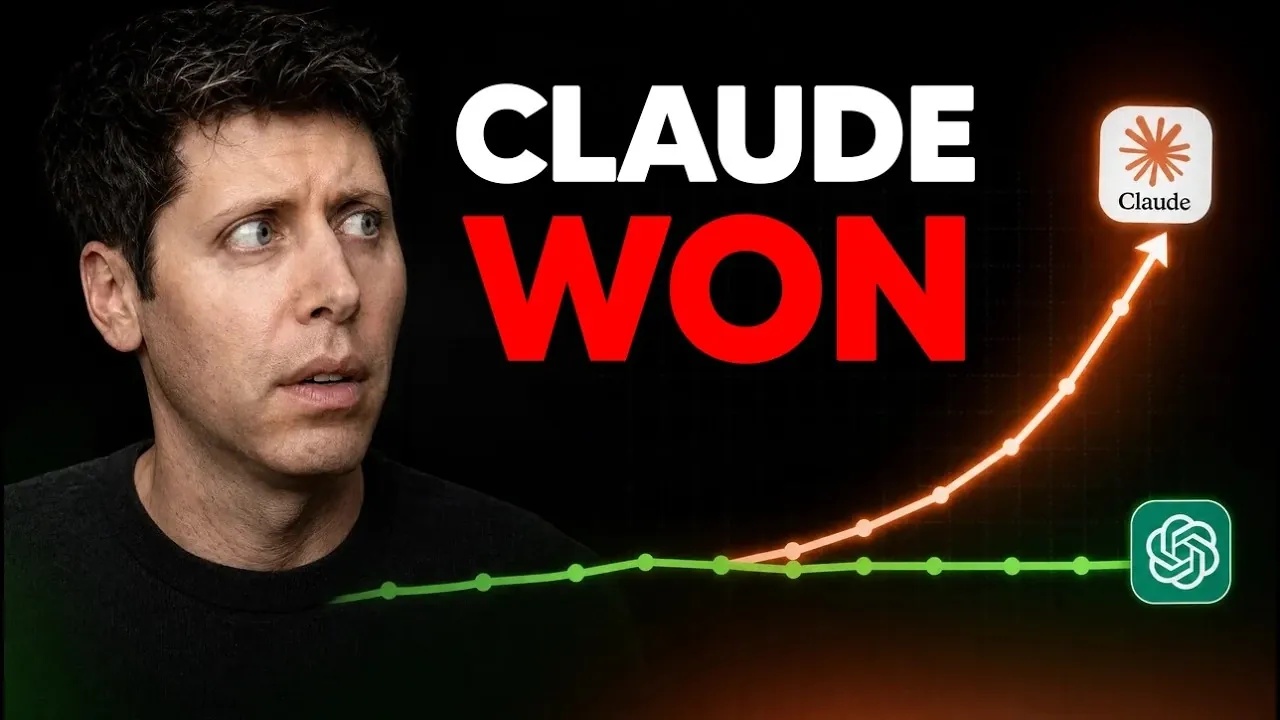
OpenAI, once a dominant force in artificial intelligence with its widely recognized ChatGPT, is now facing significant challenges in maintaining its leadership. According to AI Grid, competitors like Anthropic have rapidly gained ground, with Anthropic now commanding over 40% of the generative AI coding market, compared to OpenAI’s 21%. This shift reflects not only Anthropic’s technological advancements, such as its Claude Code model, but also its ability to align with evolving market demands. Meanwhile, OpenAI’s slower product cycles and strategic uncertainties have raised concerns among investors and enterprise clients alike.
Explore how this competitive landscape is reshaping the AI industry, with key insights into the factors driving Anthropic’s rise and OpenAI’s struggles. You’ll gain a deeper understanding of Anthropic’s ethical approach, its appeal to enterprise clients and the financial milestones that have solidified its position. Additionally, this explainer examines the broader implications of these shifts, offering a clear view of what it will take for OpenAI to regain momentum in a rapidly evolving market.
Anthropic vs OpenAI
TL;DR Key Takeaways :
- Anthropic has overtaken OpenAI in the generative AI coding market, holding over 40% market share compared to OpenAI’s 21%, signaling a major shift in industry dynamics.
- Anthropic’s valuation has surpassed $1 trillion, with annualized revenue of $30 billion, significantly outpacing OpenAI’s $850 billion valuation and raising concerns about OpenAI’s growth trajectory.
- Technological innovation has been key to Anthropic’s success, with advanced AI models like Claude Opus 4.7 and Claude Code setting new industry standards and generating billions in revenue.
- Anthropic’s ethical approach and strong enterprise adoption have bolstered its reputation, with businesses favoring its transparency and commitment to responsible AI development.
- OpenAI faces challenges such as declining market share, slower innovation cycles and investor skepticism, highlighting the need for strategic reassessment to remain competitive in the evolving AI landscape.
A New Leader Emerges
The AI market has experienced a profound transformation, with Anthropic emerging as a formidable leader. Once overshadowed by OpenAI, Anthropic now commands a significant share of the generative AI coding market, holding over 40%, compared to OpenAI’s 21%. This dramatic shift underscores the growing appeal of Anthropic’s innovative solutions, which have gained traction across both consumer and enterprise sectors.
Compounding OpenAI’s challenges, competitors such as Google’s Gemini and other advanced AI platforms have further eroded its early lead. These developments highlight a broader trend of diversification in the AI market, where businesses and users increasingly seek alternatives that align with their specific needs. Anthropic’s rise reflects not only its technological prowess but also its ability to anticipate and respond to evolving market demands.
Financial Success: Anthropic’s Rapid Growth
Anthropic’s financial achievements have been nothing short of extraordinary. The company has reached an annualized revenue of $30 billion, setting a new benchmark in corporate performance. Its valuation has soared past $1 trillion, eclipsing OpenAI’s valuation of $850 billion. This remarkable growth trajectory demonstrates Anthropic’s ability to deliver products that resonate deeply with both individual users and large enterprises.
In contrast, OpenAI faces increasing scrutiny from investors, who are questioning its capacity to sustain growth in a rapidly evolving market. Concerns about slower innovation cycles and strategic missteps have further fueled skepticism. Anthropic’s financial success, coupled with its ability to consistently meet market expectations, has positioned it as a dominant force in the AI industry, leaving OpenAI struggling to regain investor confidence.

Explore further guides and articles from our vast library that you may find relevant to your interests in OpenAI.
- Leaked ChatGPT 5.5 Pro Tests Reveal OpenAI’s “Spud” Building Interactive 3D Worlds
- OpenAI to Launch ChatGPT 5.5 and a New Unified Desktop Super App
- Why OpenAI’s “Spud” Model is Outperforming Google Gemini 3.1
- Why OpenAI’s Upcoming “Spud” GPT-6 Model Could Be The Next Big Evolution in AI
- ChatGPT “Spud” : What We Know About OpenAI’s Next GPT AI Model Evolution
- The Real Reason OpenAI Suddenly Shut Down Sora
- OpenClaw Founder Joins OpenAI : OpenClaw Shifts to a Foundation Model
- OpenAI’s Powerful New ChatGPT 6 Model Code Named “Spud”
- Claude Opus 4.7 Leaks & Anthropic’s Full-Stack AI Studio
- OpenAI Labels Dime Device Ad Fake as Hardware Speculation Grows After Super Bowl
Technological Innovation: Anthropic Sets the Pace
At the heart of Anthropic’s success lies its relentless focus on technological innovation. The company has consistently introduced innovative AI models, including Claude Opus 4.6, 4.7 and Mythos, which have redefined industry standards in areas such as coding, reasoning and autonomous task execution. These models have outperformed OpenAI’s offerings in critical metrics, solidifying Anthropic’s reputation as a technological leader.
One standout product, Claude Code, has become a cornerstone of Anthropic’s dominance in the generative AI coding sector, generating $2.5 billion in annualized revenue. This specialized coding model exemplifies Anthropic’s ability to address specific market needs with precision and efficiency. By consistently delivering superior performance and innovation, Anthropic has set a high bar for competitors, further widening the gap between itself and OpenAI.
Enterprise Adoption: Trust as a Competitive Advantage
Anthropic’s ascent has been significantly bolstered by its strong foothold in the enterprise market. Businesses increasingly favor Anthropic for its reliable performance and commitment to ethical AI development. The company’s principled stance, including its refusal to engage in government surveillance or develop autonomous weapons, has resonated with enterprises seeking trustworthy and responsible partners.
This ethical approach has not only enhanced Anthropic’s reputation but also provided a competitive edge in securing enterprise clients. By prioritizing transparency and accountability, Anthropic has cultivated a level of trust that sets it apart from competitors. This trust has translated into widespread adoption of its solutions, further solidifying its position as a leader in the AI industry.
OpenAI’s Challenges: Losing Ground
OpenAI is grappling with a series of challenges that threaten its standing in the AI sector. Its market share has steadily declined and concerns about its valuation and strategic direction have grown among investors. Critics have pointed to slower product releases and a perceived lack of innovation compared to rivals like Anthropic, which have consistently introduced advanced and market-relevant solutions.
These challenges have eroded confidence among both investors and enterprise clients, leaving OpenAI in a precarious position. While the company still possesses significant resources and expertise, its ability to adapt to the rapidly changing landscape remains uncertain. The growing competition underscores the need for OpenAI to reassess its strategies and prioritize innovation to regain its footing.
The Road Ahead: A Dynamic and Uncertain Future
The evolving AI industry presents both opportunities and challenges for its key players. Anthropic’s ability to combine technological innovation with ethical decision-making has set a new standard for the field, positioning it as a leader in the current landscape. Its momentum suggests a strong likelihood of maintaining its lead, particularly as it continues to align its offerings with market demands.
For OpenAI, the path forward is less clear. While the company retains substantial resources and a legacy of innovation, it must address critical issues to reclaim its position as an industry leader. The competition between OpenAI and Anthropic highlights the importance of adaptability, trust and a forward-thinking approach in navigating the complexities of the AI sector.
Ultimately, the organization that can best balance technological advancements, market responsiveness and ethical considerations will emerge as the dominant force in this rapidly changing industry. While Anthropic currently holds the upper hand, the dynamic nature of the AI market leaves room for further shifts in the balance of power, making sure that the race for leadership remains both competitive and unpredictable.
Media Credit: TheAIGRID
Disclosure: Some of our articles include affiliate links. If you buy something through one of these links, Geeky Gadgets may earn an affiliate commission. Learn about our Disclosure Policy.
