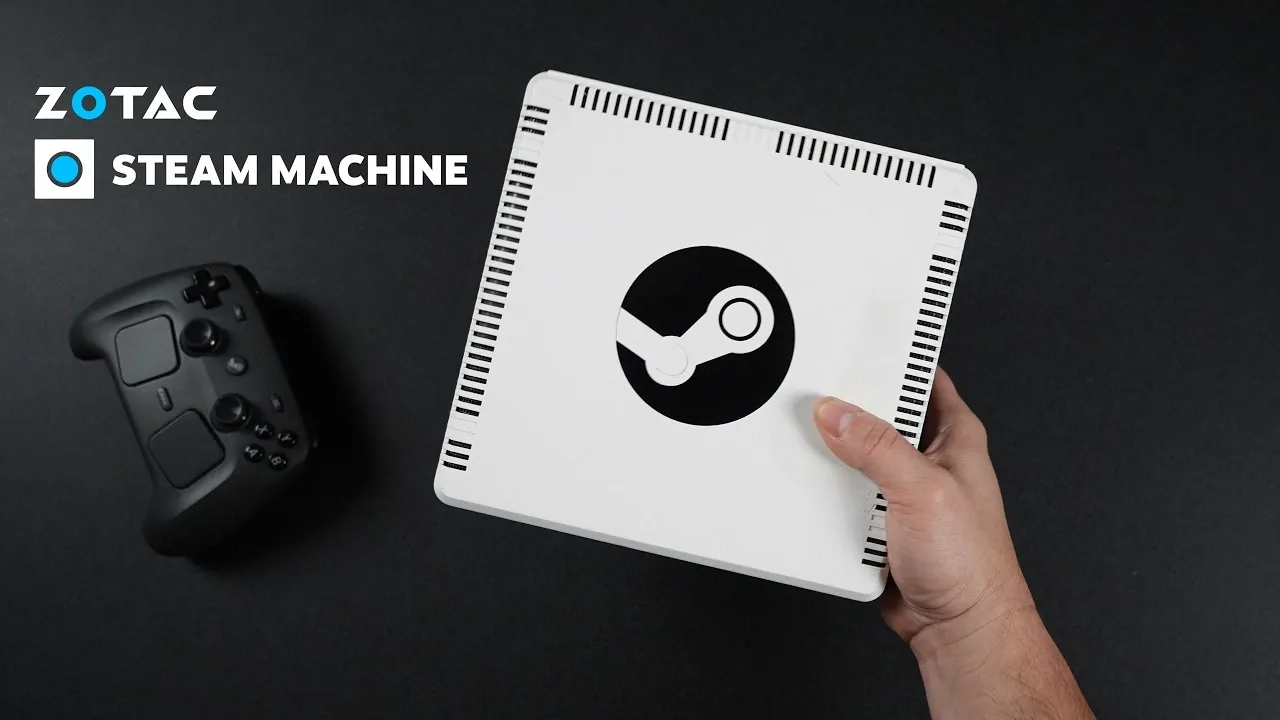
Valve’s ambitious Steam Machine project aimed to bridge the gap between PC and console gaming and the Zotac SN780 was one of its flagship devices. Released in 2016, this compact gaming PC came equipped with an Intel Core i5-6400T processor, an Nvidia GTX 960 GPU and 16GB of DDR3 RAM, all optimized to run Steam OS, a Linux-based operating system. In a recent revisit by ETA Prime, the SN780’s performance was tested against modern gaming demands, revealing both its enduring strengths and its limitations. Notably, the system struggled with newer AAA titles but excelled in running older classics like Skyrim and indie games such as Hades, underscoring its potential as a retro gaming platform.
Explore how the SN780 fares in 2026 with updated software and hardware constraints, including the use of Bazi OS as a workaround for Steam OS compatibility issues. Gain insight into its gaming benchmarks across various genres, from smooth performance in 2D indie games to its challenges with graphically intensive modern titles. You’ll also discover how the original Steam Controller, with its unconventional design, complements the system’s retro appeal. This overview offers a detailed look at the SN780’s place in gaming history and its relevance for enthusiasts today.
Zotac NEN SN970 Steam Machine
TL;DR Key Takeaways :
- The Zotac SN780 Steam Machine, launched nearly a decade ago, was a compact gaming PC designed to run Valve’s Linux-based Steam OS, symbolizing innovation in gaming hardware at the time.
- Its hardware, including an Intel Core i5-6400T CPU, Nvidia GTX 960 GPU, 16GB DDR3 RAM and a 250GB SSD, was suitable for mid-range gaming in 2016 but struggles with modern AAA titles in 2026.
- While Steam OS faced compatibility issues with modern drivers, installing Bazi OS allowed the system to remain functional and access Steam’s game library, showcasing its adaptability for retro and indie gaming.
- The Steam Controller, included with the SN780, offered a unique gaming experience with its trackpads and customizable buttons, though it was divisive among users due to its unconventional design.
- The SN780 holds historical significance as part of Valve’s hardware experiment, excelling in retro and indie gaming but falling short in modern gaming performance, highlighting its role as a nostalgic piece of gaming history.
Hardware Overview
The Zotac SN780 was a solid performer when it debuted, featuring hardware that could handle most games of its time. At its core is the Intel Core i5-6400T processor, a quad-core CPU with a maximum clock speed of 2.8 GHz. This processor, while efficient in 2016, now struggles to meet the demands of modern gaming. Paired with an Nvidia GeForce GTX 960 GPU featuring 3GB of GDDR5 VRAM, the system was well-suited for mid-range gaming during its prime. Its 16GB of DDR3 RAM, clocked at 1600 MT/s and a 250GB Samsung EVO 860 SSD provided adequate memory and storage for gaming and general use.
Connectivity options were robust for its era, including USB-C, USB 3.0, USB 2.0, HDMI, dual Ethernet ports, Wi-Fi 5, Bluetooth and an SD card reader. However, the absence of modern standards like USB 4.0 or Wi-Fi 6 highlights the system’s age. The unit tested lacked its rear cover but came with the original Steam Controller, a device that was both innovative and polarizing among gamers due to its unconventional design.
Software and Compatibility
The SN780 was originally designed to run Steam OS, Valve’s Linux-based operating system. However, in 2026, Steam OS struggled to boot due to compatibility issues with modern hardware drivers. To overcome this limitation, Bazi OS, a Linux-based alternative, was installed. This workaround enabled the system to function effectively and provided access to Steam’s extensive game library, making sure the SN780 could still serve as a gaming platform.
The included Steam Controller paired seamlessly with the system. Its unique trackpads and customizable buttons offered a distinct gaming experience, though it required a learning curve for users accustomed to traditional controllers. While the controller’s design was divisive, it remains a testament to Valve’s willingness to experiment with innovative input methods.
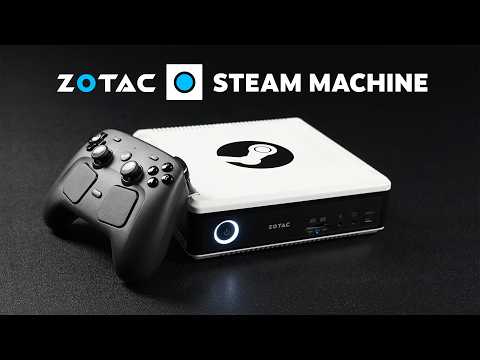
Here are more detailed guides and articles that you may find helpful on Steam Machine.
- Valve Steam Machine Update: RAM Supply Stabilizes as Unified Deck Software Expands
- Valve’s 2026 Steam Machine is Almost Here
- Why the Upcoming Valve Steam Machine Might Be Sold at a Loss
- Valve Steam Machine Plans : Focus on Performance, Not Price
- How Valve Finally Solved the Steam Machine’s Biggest Performance Bottleneck
- Valve Targets mid-2026 Steam Machine Release Date Launch
- Valve’s $800 Steam Machine Could Now Cost Over $1,200
- $60 Steam Controller 2 is Packing Features PC Gamers Have Been Waiting For
- Steam Machine Pricing Estimate Moves to $750–$800 for 512GB and 2TB
- Valve Steam Machine Release Window Set for Before June 2026
Gaming Performance
The gaming capabilities of the Zotac SN780 were tested across a variety of titles, ranging from older classics to modern AAA games and indie releases. The results highlight the system’s strengths and weaknesses:
- Older Titles: Games like Skyrim and Dirt 3 ran smoothly, showcasing the system’s ability to handle retro gaming. Skyrim achieved an average of 54 FPS at medium settings in 1080p, while Dirt 3 delivered an impressive 93 FPS on high settings at the same resolution.
- Modern AAA Games: The system struggled with newer, more demanding titles. Red Dead Redemption (PC port) managed under 50 FPS at low settings in 900p, while Cyberpunk 2077, even with FidelityFX Super Resolution (FSR) enabled, struggled to maintain 30 FPS at 720p on low settings. The Witcher 3 fared slightly better, averaging 38 FPS on the Steam Deck preset at 720p.
- Indie and 2D Games: Less demanding titles performed exceptionally well. Silk Song ran at 1080p with a smooth 120 FPS, while Hades maintained a steady 80 FPS, demonstrating the system’s suitability for indie gaming.
These results underscore the SN780’s limitations when tackling modern gaming demands but also highlight its strengths as a retro gaming machine.
Limitations and Observations
The SN780’s limitations become apparent when attempting to run modern AAA games. The Intel Core i5-6400T’s relatively low clock speeds create a bottleneck in CPU-intensive games, while the Nvidia GTX 960, though capable for its time, struggles with contemporary graphics requirements. Additionally, the GPU lacks support for modern features like Gamecope, further limiting its utility in today’s gaming landscape.
Despite these challenges, the system retains value for retro gaming enthusiasts. It handles older and less demanding games with ease, making it a viable option for those seeking a dedicated retro gaming machine. The compact design and inclusion of the Steam Controller add to its appeal as a nostalgic piece of gaming history. However, for gamers seeking a system capable of running modern AAA titles, the SN780 falls short of expectations.
Reflections on the Steam Machine
The Zotac SN780 Steam Machine offers a nostalgic look at a pivotal moment in gaming hardware history. As part of Valve’s ambitious attempt to merge PC gaming with the console experience, the Steam Machine represented a bold experiment. While it was a capable system in its prime, advancements in technology have left it behind. For retro gaming or indie titles, it remains a functional and enjoyable device, but its relevance in the modern gaming landscape is limited.
As a relic of Valve’s hardware experiment, the SN780 holds historical significance. It serves as a reminder of the industry’s ongoing evolution and the challenges of balancing innovation with practicality. While the Steam Machine concept ultimately did not achieve widespread success, it paved the way for future innovations, including the Steam Deck, which has redefined portable PC gaming. For enthusiasts and collectors, the SN780 is a fascinating artifact that captures a unique moment in gaming history.
Media Credit: ETA PRIME
Disclosure: Some of our articles include affiliate links. If you buy something through one of these links, Geeky Gadgets may earn an affiliate commission. Learn about our Disclosure Policy.
